
From industry to educator
Meet Hang, ACE educator at Community Access and Services SA (CAASSA)
- Hang is an ACE educator and program coordinator.
- She teaches programs that help migrant communities build English language, Digital Skills, confidence and connection.
- Hang has been teaching ACE for 5 years and previously worked as a secondary school teacher, university lecturer and community support worker.
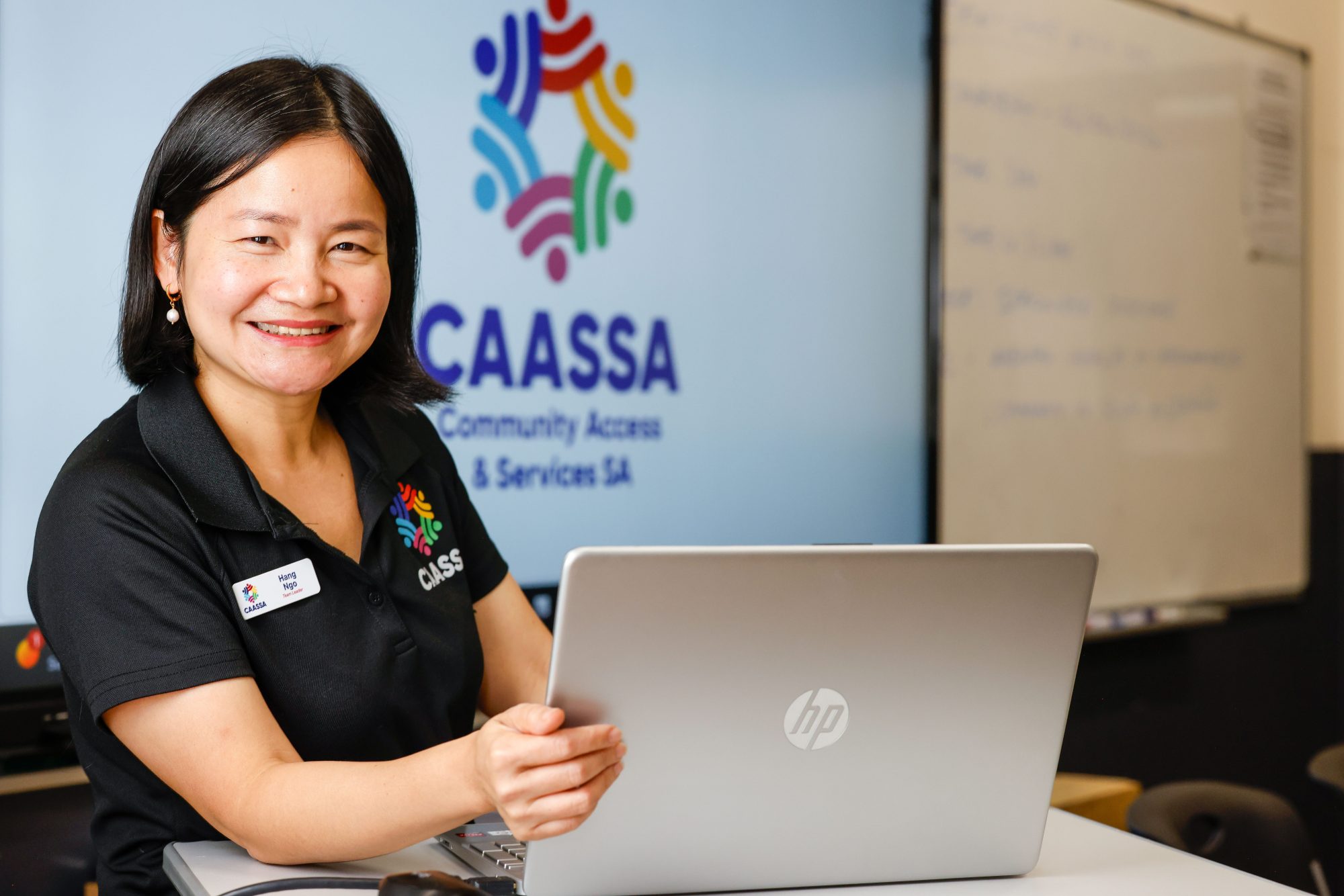
“I’ve worked in education in different contexts for many years, but what really led me to ACE was my connection to community and my own experience as a migrant.
I started out training as a secondary school teacher, worked as a university lecturer overseas, and then retrained when I migrated to Australia. While studying, I began working as a support worker in the Vietnamese community, and that’s where things really shifted for me.
When I engaged with ACE, I recognised, myself as a migrant, how much language barrier stopped me – from opportunity, from being recognised, from integrating into mainstream. I became an ACE educator because I wanted to reduce those barriers for others.”
“Even though I already had significant teaching experience, I still had to formally qualify to work in ACE in Australia. My Master of Teaching qualified me for secondary school, not adult learners… so I completed the Certificate IV in Training and Assessment.
Once I had that qualification, I started running ACE programs and gradually expanded them. I realised my skills working with my own community were transferable, and that ACE relies heavily on trust and relationships.
What people already have is the skill working with the community – the trust, the rapport – which is the most important with ACE. That understanding helped me support others from diverse backgrounds to become ACE educators too.”
“What I value most is seeing people who were previously isolated begin to connect—with language, with others, and with themselves. Many learners start off lacking confidence, often vulnerable, and hesitant to engage.
Most of them want to stay at home, don’t want to go out, are shy, vulnerable… How can I help them start saying simple phrases, showing they want to connect? Seeing that transformation is incredibly meaningful.
I believe when we get, we give at the same time.
That belief really sums up why the work matters to me.”
“ACE work is varied and doesn’t exist in isolation. Most of us are not full‑time educators – we balance teaching with coordination and other community services. A typical day might include teaching ACE classes, coordinating educators, supporting other community programs and referring learners between services so they get the best support.
When staff see a learner with a need, they refer them to ACE… within CAASSA, we connect clients to different programs so they get the best benefit.”
“I would say: don’t assume that being highly qualified automatically makes you a good ACE educator. ACE requires its own skill set – particularly around trauma‑informed practice, flexibility, and continuous learning. Professional development is essential.
Most importantly, you need a genuine commitment to love and support their community, and you don’t mind learning more along the way.”